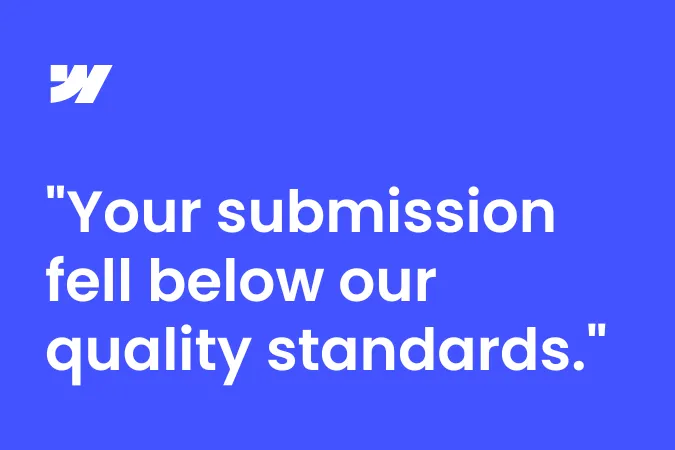
September 2026 update: Is it still worth selling Webflow templates in 2026?
Webflow template sales have changed dramatically in 2026. I break down what happened, why the Marketplace is struggling, and why I no longer recommend selling Webflow templates for side income.
In April 2025, I wrote the original article about whether selling Webflow templates was still worth it. My answer at the time was yes.
I kept updating that article every few months as I sold more templates, and learned more about the Webflow Marketplace. It became one of the most visited posts on my website. I got so many emails and questions about it that I even ended up making a Udemy course teaching people how to make side income by selling Webflow templates.
And now I'm writing this.
Because if you asked me today (in September 2026) whether I think you should start selling Webflow templates, my answer would be no.
The Webflow templates market has changed remarkably quickly in the past 6 to 8 months. My own sales numbers look very different from what they did just six months ago, and the overall market sales show the same trend.
So, considering that quite a few people still find me through that original article telling them this is worth doing, I think this update is overdue.
The numbers
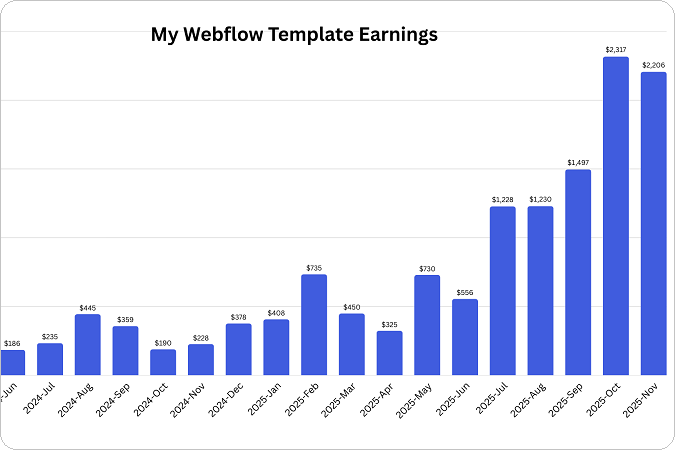
A graph is worth a thousand words, so here you go.

From earning $2,300+ from templates in October 2025, my monthly earnings had almost halved by January 2026. Since February, I've averaged around $600 a month, despite having more templates for sale today than I did in October 2025, which was pretty much the opposite of what I had expected to happen.
And at first, I assumed this was just happening to me.
Was I suddenly making bad templates? Not getting them in front of the right people? Was competition suddenly too high?
Then I started paying attention to the overall Webflow Marketplace numbers available through Webflow's own Asset Dashboard, the portal creators use to manage their templates and view Marketplace insights.
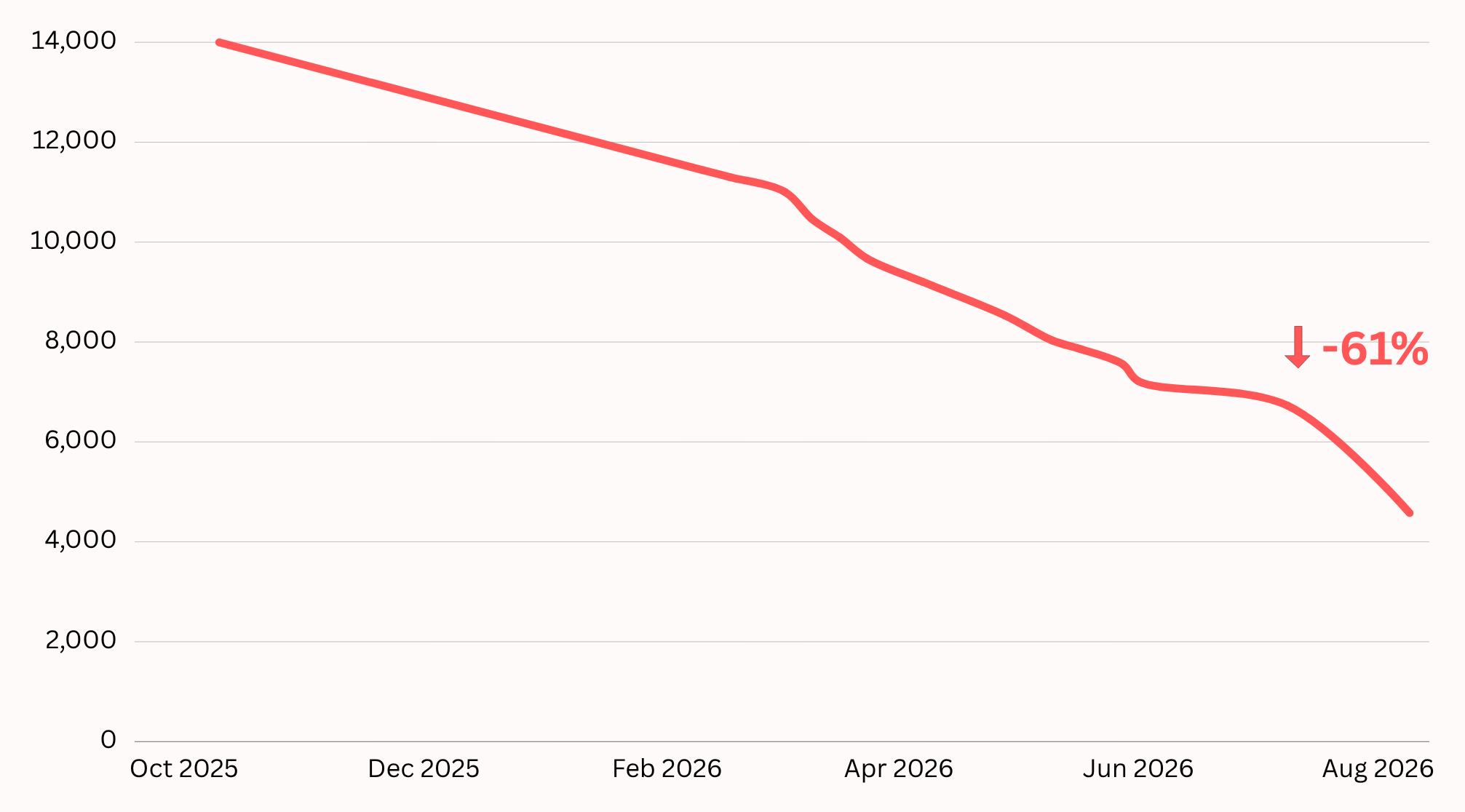
In a nutshell, this is what happened to total Webflow Marketplace sales between October 2025 and August 2026.
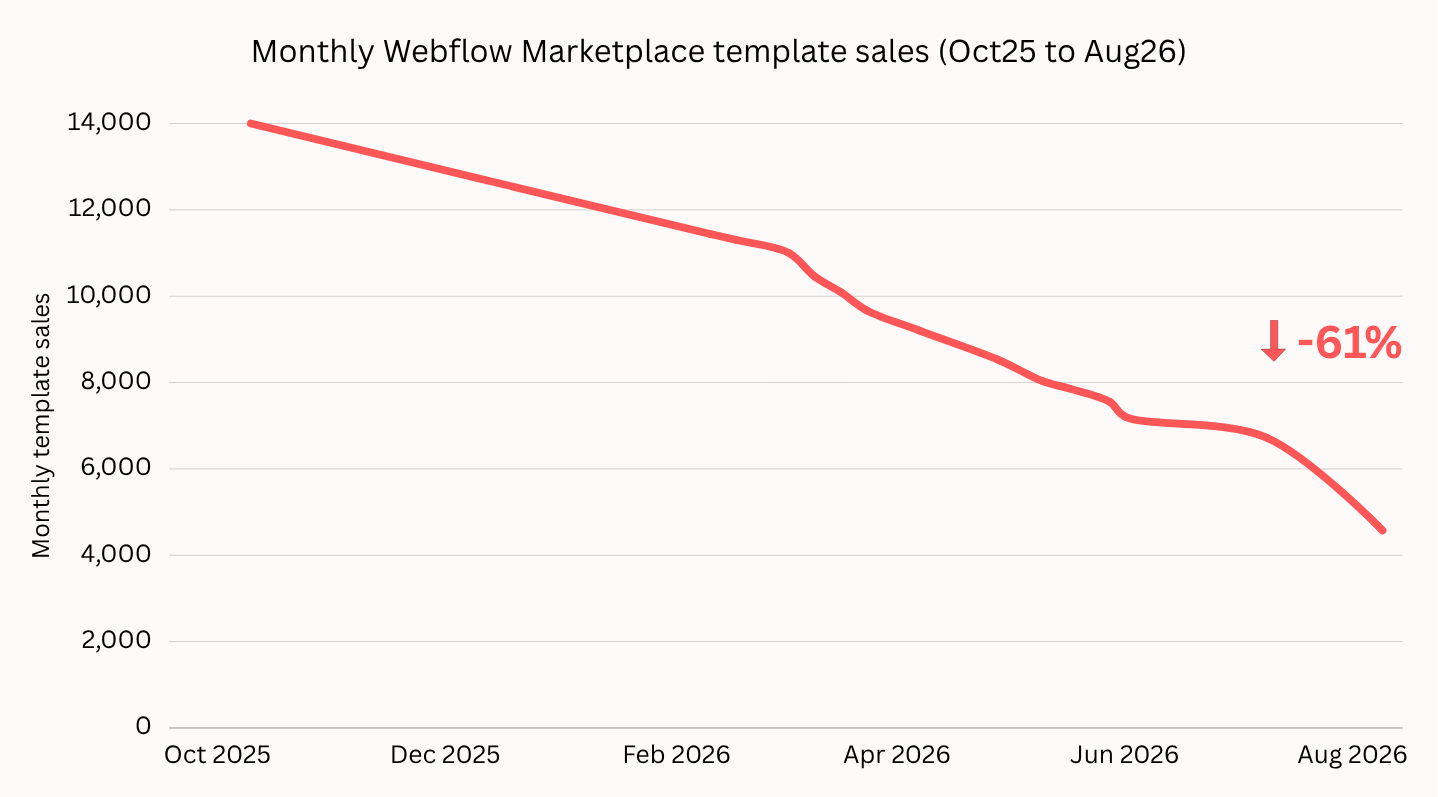
The data comes directly from snapshots from the Asset Dashboard, which reports template sales over a rolling 30-day period. In March 2026, the dashboard showed roughly 11,500 template sales across the Marketplace in a single month. By August, that number had fallen to around 4,500.
That's a decline of roughly 60% in six months.
So, what happened to the Webflow templates marketplace?
This is where I move from numbers into speculation but looking at what's changed both at Webflow and in the wider website-building market over the past year, I think there are a few main reasons.
AI is giving template buyers another option
A typical template customer is often someone thinking: “I need a decent website. I don't want to hire someone for thousands of dollars, and I don't want to design one from scratch. I'll just buy a template and customize it myself.”
Until recently, that was one of the easiest ways to build a website quickly, easily and on a budget. AI has changed that equation. That same person can now open Lovable, Google AI Studio, Claude, or any number of AI website-building tools, describe what they want, and have something usable generated for them in minutes.
Now, there are plenty of valid criticisms of this comparison, and I share many of them. While it’s true that an AI-generated website design is not the same as building a website that's actually ready to publish, and there are often problems of responsiveness, accessibility, performance, CMS functionality, SEO, maintainability, etc.
But here's the problem for template creators: none of that necessarily matters if the buyer doesn't care.
The AI-generated result doesn't have to be better than a professionally designed Webflow template. It just has to look and feel good enough that the person who might previously have spent $29–$129 on a template no longer sees a reason to buy one. And that alone is enough to reduce demand. Substantially.
Webflow stopped prioritizing the Template Marketplace
While the Template Marketplace once seemed to be something Webflow actively promoted, that doesn't appear to be the case anymore. Templates used to feature prominently on Webflow's main website. They were regularly promoted through Webflow's own channels, and there seemed to be a much more active effort to bring people into the Marketplace.
Today, templates don't appear at all on Webflow’s homepage, rarely get a mention in its newsletters, and even communication between Webflow and Marketplace creators has become much quieter.
More importantly, Webflow simply doesn't seem to be putting the same marketing effort into bringing traffic to the Marketplace. And for a marketplace, traffic is everything. If fewer potential customers are arriving to browse templates, there will naturally be lesser and lesser sales.
So, if not templates, where is Webflow focusing its attention and marketing? In my opinion, on newer, shinier AI features and larger Enterprise customers: companies with bigger budgets, bigger teams and complex needs which often mean a custom build rather than a $29–$129 template.
So less Marketplace traffic + fewer template-oriented customers coming to Webflow = fewer template sales
Webflow itself is getting too expensive for smaller customers
And then there's pricing.
Webflow has never been the cheapest way to build a website, but the price increases in May 2026 (which made its most popular CMS plan 10% more expensive with annual billing and a whopping 35% more expensive with monthly billing!) made it increasingly difficult to afford for small businesses building simple websites.
That matters for template sales because these are exactly the customers the Marketplace relies on.
A freelancer, startup or small business considering a $29–$129 Webflow template isn't only deciding whether the template is worth the money. They're deciding whether the entire Webflow ecosystem is worth committing to every month. And a 35% increase in that cost every month makes that decision much harder, especially when cheaper and increasingly capable alternatives are popping up everywhere.
What does Webflow say about declining template sales?
For a while, Webflow didn't say much publicly about what was happening. Meanwhile, more and more template creators started raising the issue, including long-time creators who had been earning full-time from the Marketplace for years.
Webflow eventually acknowledged that the decline was real and that sales were down across the Marketplace, not just for individual creators. They shared two broad reasons in a response in the Webflow community forum:
“1. A real demand shift. How people start a site is changing fast — more are starting from AI/agent-generated projects instead of browsing for a template first. That's industry-wide, not a switch someone flipped at Webflow.
2. Oversupply + discovery. The catalog has grown enormously. More strong templates compete for the same attention, buyers hit choice-overload, and the browse experience hadn't kept up with the size of the library.”
They added
“I don't think the play is "wait for 2024 to come back." The bigger opportunity is making templates the best starting point inside an AI/agent workflow — a high-quality foundation that saves people time and tokens versus generating from scratch. We're actively exploring that. It's a repositioning, and I'd rather tell you that than pretend the old shape returns unchanged.”
And I think that acknowledgement matters. Even Webflow isn't framing this as a temporary slump that creators just need to wait out. The market itself is changing, and templates will have to find a new place within it.
So, would I recommend selling Webflow templates today?
No.
Creating a good Webflow template is a significant investment. You can easily spend weeks researching, designing, developing, testing and preparing a template for submission, with no guarantee that Webflow will even approve it.
And if it does get approved, you're entering a Marketplace with more templates than ever competing for attention, significantly fewer sales than there were even six months ago, and a customer base that appears to be shrinking or changing altogether.
So would I recommend that someone starting from zero today invest the time and effort required to build a Webflow template business as a source of side income? No.
I think I got into Webflow templates just as the tide was beginning to turn. I got to experience enough of the good period to see exactly why this was such an attractive opportunity. My income grew as I added more templates, older templates continued selling in the background, and for a while it genuinely looked like the kind of side income that would compound as my portfolio grew.
Today, I have more templates for sale than ever, and I'm making a fraction of what I was making at my peak.
Could the Marketplace recover? Perhaps. Webflow may find a way to reposition templates within AI-driven workflows, and the opportunity could look completely different a year from now.
But at this point, I'm tired of waiting for that turnaround. I've tried bringing customers to my templates myself through social media, my newsletter, my website and even paid ads. So far, I haven't seen anything close to the results that would convince me this is a good investment for someone starting from scratch today.
That's ultimately why I've changed my mind. The amount of work, uncertainty and competition involved no longer makes sense to me relative to the potential return.
If I were starting from zero today, knowing what I know now, I wouldn't choose Webflow templates as the side-income opportunity to pursue.